

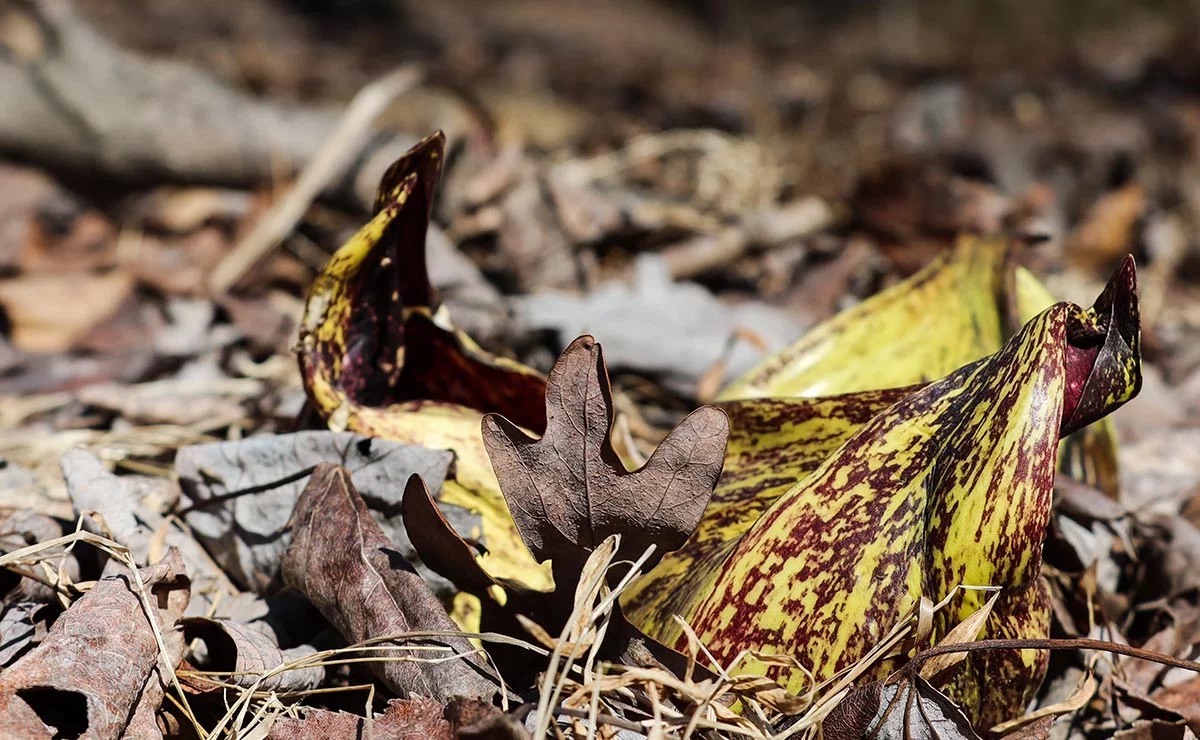
The name is actually very fitting, but it doesn’t give this wetland beauty a good reputation. Eastern Skunk Cabbage is one of the very first plants to bloom in the spring, usually by the beginning of March. Even with snow remaining on the ground, the showy maroon and yellow protective hood (called a spathe) protrudes from the ground and eventually parts on one side to reveal a knob-like flower (called a spadix).
The plant has evolved to bloom this early by producing its own metabolic heat, which melts any obstructive snow and allowing the flowers to be pollinated by beetles and flies. Skunk Cabbage gets its name from the skunk-like odor released from bruised or broken leaves. The flowers themselves also emit a barely perceptible fetid (see the scientific name: S. foetidus) scent that attracts its pollinators, who believe they are being led to a decaying animal.
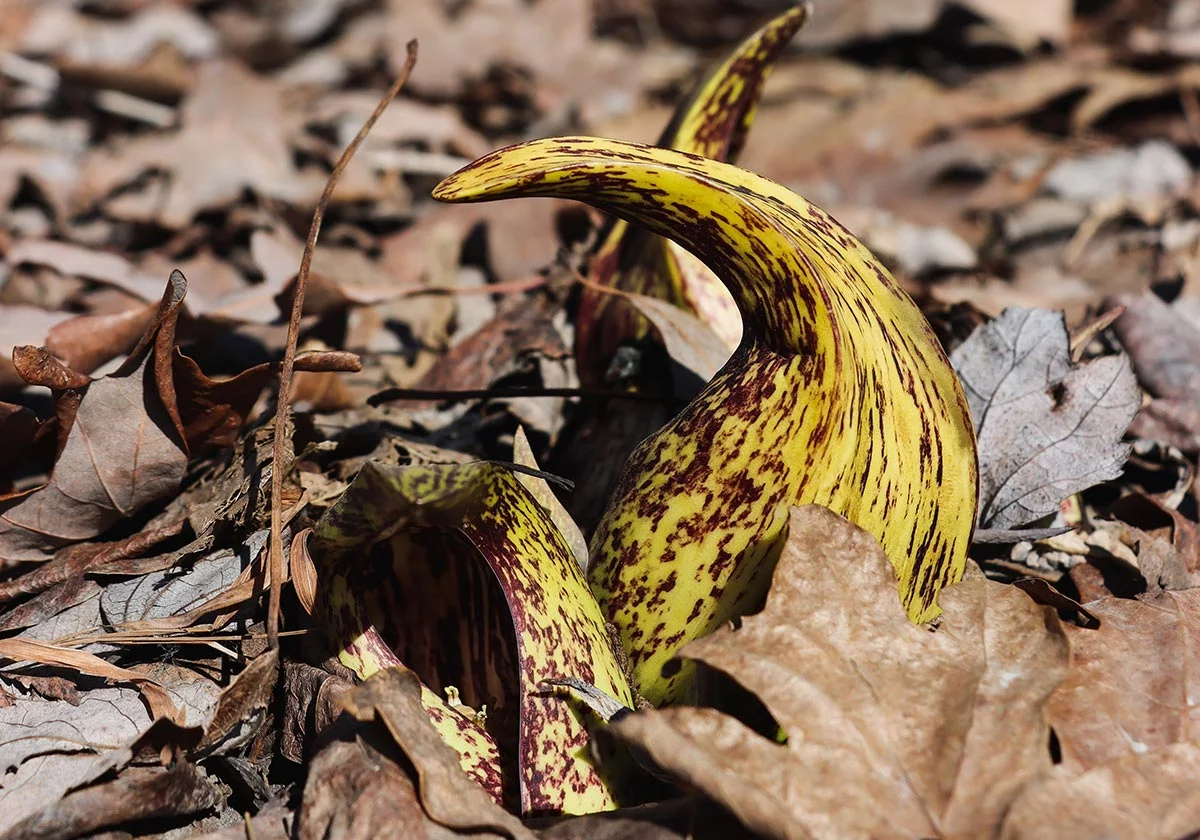
By mid-spring, these sprawling cabbage-like plants define the forested wetlands in Pennsylvania. Each colony resembles an expansive salad garden with evenly spaced broad, leafy greens filling out otherwise muddy expanses. As summer hits its stride and the leaves are full on the trees above, the leaves of Skunk Cabbage start to fade and the flowers give way to spherical dry fruits that are either carried or washed away to form new colonies. Check out this Nature Institute article for even more information on this wonderful and under-appreciated native plant.